Building A Multi-Role Recruitment And Matching Platform
How Neobyte Solutions built a modern recruitment platform designed to support intelligent matching, automation, and multi-role recruitment workflows.
Available online:
https://app.staa.agency/register
Lugera
Continuous Integration
Web
Multi-role recruitment and matching platform
Project Overview
Creating a stronger digital foundation for recruitment workflows
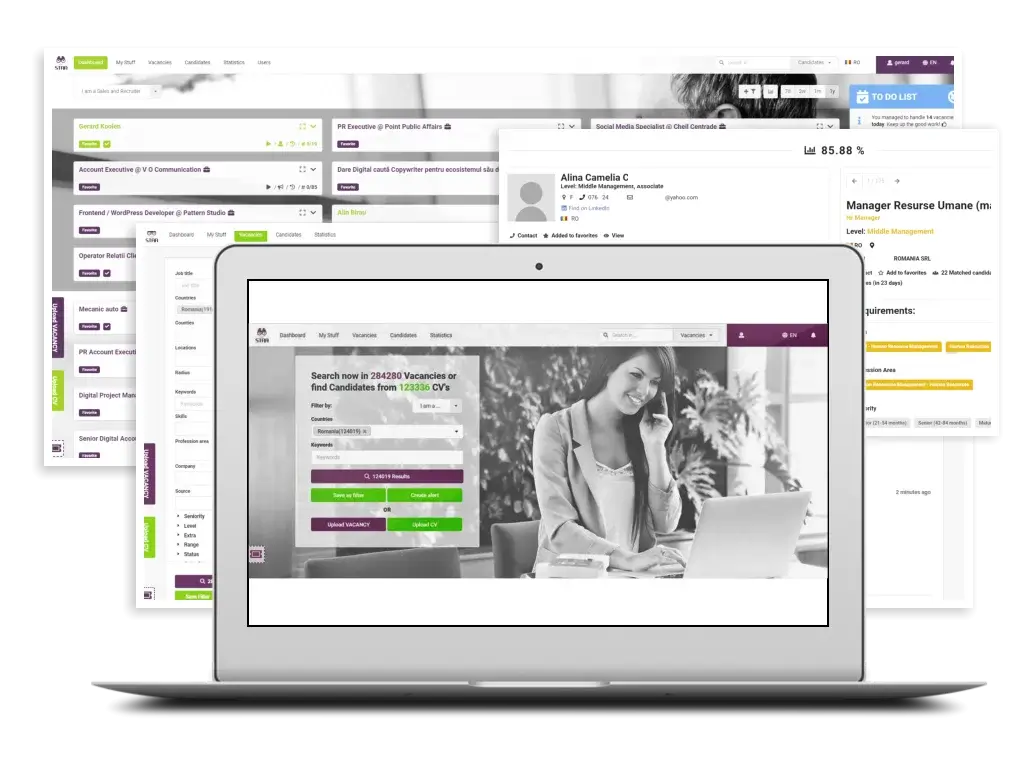
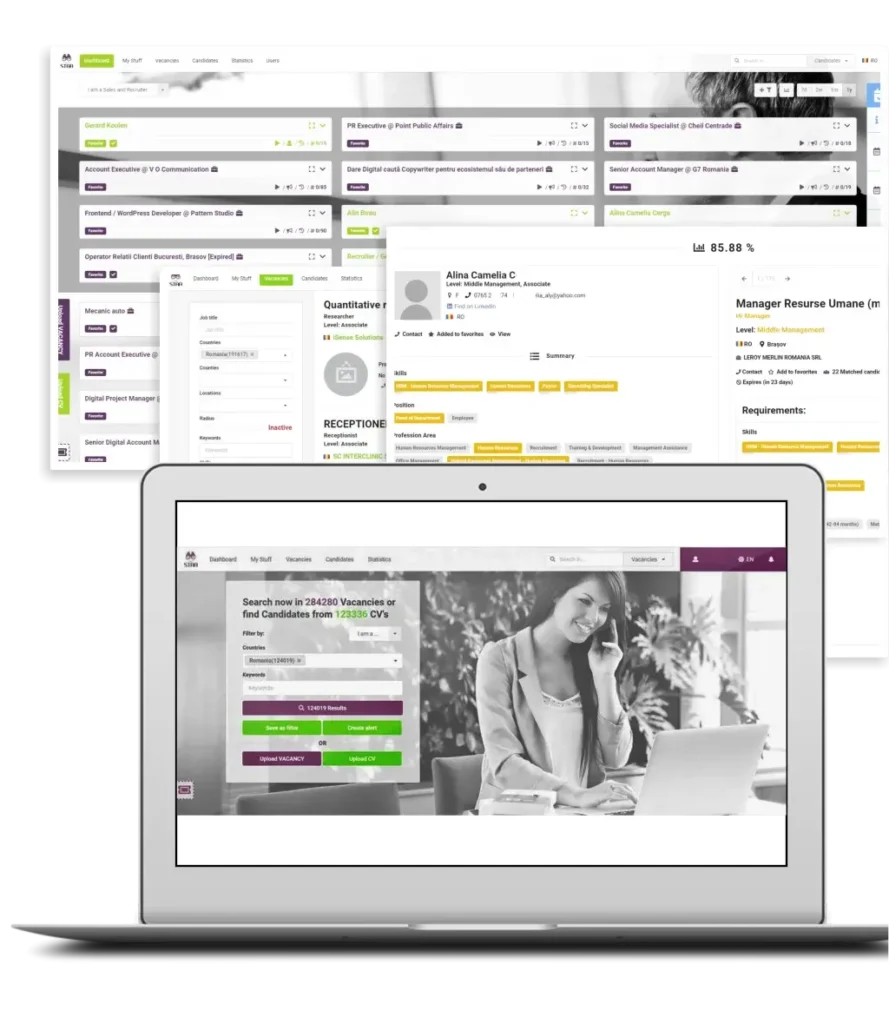
STAA is a recruitment technology platform designed to help candidates, companies, and agencies manage vacancies, CVs, applications, communication, and matching in one structured environment.
The project is built around two connected applications:
- STAA Core: Supports central platform operations such as agency management, document handling, harvesting, and parsing.
- STAA Agency: Powers the main user-facing experience, including candidate dashboards, company workspaces, tenant administration, communication tools, billing, consent management, and platform settings.
The goal was not only to create a functional recruitment application, but to build a platform capable of supporting complex workflows, multiple user roles, large datasets, and future feature expansion.
The Challenge
Managing complexity across candidates, companies, and agencies
Recruitment platforms need to support different users with very different goals:
- Candidates need a simple way to manage their profile, upload CV information, browse relevant vacancies, and compare opportunities.
- Companies need access to candidate matches, vacancy management, billing, and communication tools.
- Administrators need visibility across tenants, users, countries, legal content, pricing, feedback, and matching configuration.
The challenge was to bring these disparate workflows into one platform while keeping the system maintainable, searchable, secure, and ready to scale.
Solution Strategy
A modular platform architecture
The platform architecture was designed to balance flexibility, maintainability, and scalability across complex recruitment workflows.
Unified Recruitment Ecosystem
Bringing candidate management, vacancies, communication, matching, and administration into a single platform experience.
Modular Design
Separating operational services from user-facing workflows to improve maintainability and adaptability.
Built for Scale
Supporting large datasets, search-intensive operations, multiple user roles, and growing recruitment demands.
User Experience
Role-specific interfaces for real recruitment workflows
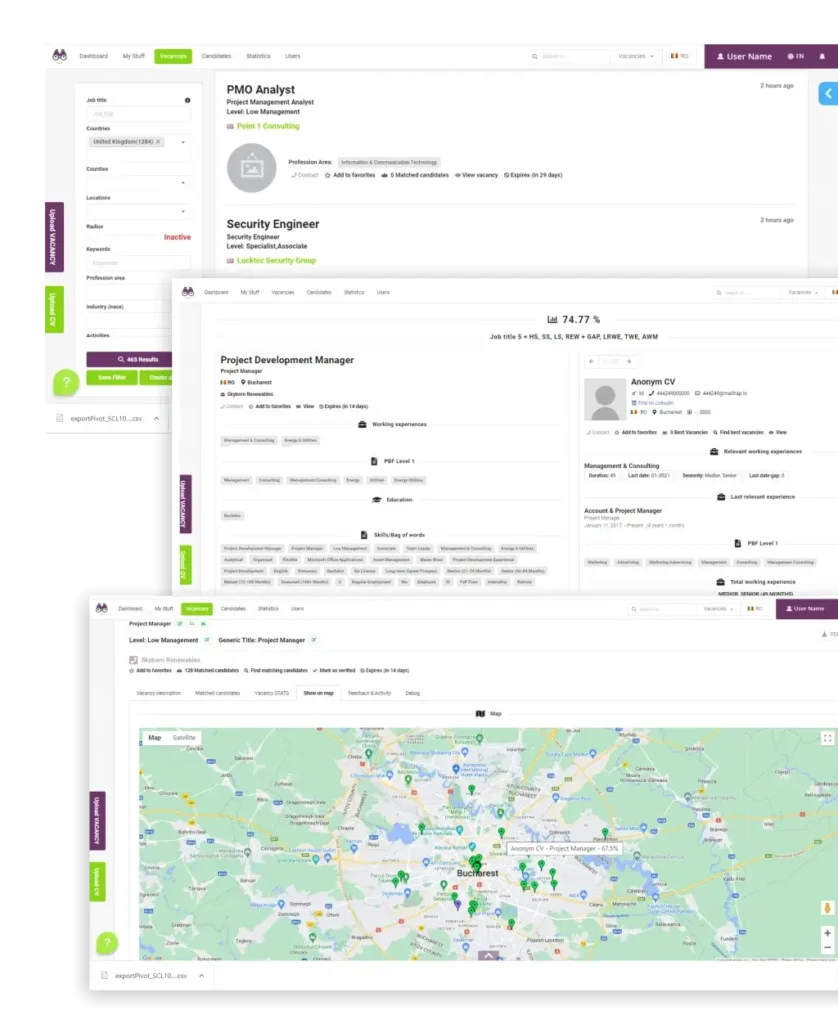
The user experience is strictly organized around dedicated workspaces tailored to each user type:
Candidates
Manage profiles, upload or maintain CV data, view matching vacancies, compare opportunities, utilize credits, handle billing, and secure accounts via 2FA.
Companies
Register, publish and edit vacancies, review candidate matches, compare CVs against vacancies, purchase access, and track candidate communications.
Company Administrators
Maintain overarching control over tenant users, vacancies, GDPR consents, legal pages, pricing plans, and system activity.
Data Analysts
Manage terminology synonyms, training datasets, user feedback, and match comparison configurations.
Super Administrators
Platform-level control over tenants, cross-border localized settings, global pricing/billing templates, matching algorithms, and automated system options.
CV Upload, Parsing, and Job Portals
Candidates can upload files in common formats (PDF, DOCX, DOC, RTF, TXT).
The file is dispatched via STAA Core to a parsing service that extracts personal details, education, and other data into structured records.
Users can review extraction statuses, manually fill missing data, or re-parse on demand.
To safeguard these highly sensitive datasets, the platform implements Two-Factor Authentication (2FA).
Platform Capabilities
Beyond vacancy and CV management, STAA includes a comprehensive set of enterprise product features.
- Advanced Elasticsearch-powered search, filtering, and matching
- Tenant, billing, credits, and payment flow management
- Asynchronous candidate-vacancy comparison matrices
- Email templates, automated notifications, and communication logging
- Consent-driven, GDPR-compliant retention workflows
- Legal page and public candidate application flow management
- Widget-based external integrations
- Document harvesting and automated post-processing
Asynchronous Processing
Keeping resource-intensive operations out of the user flow
To maintain responsive user experiences, STAA utilizes asynchronous processing powered by Symfony Messenger and Redis-backed background services.
This approach allows resource-intensive operations to be processed efficiently without interrupting the user experience.
Background processes support:
- Document processing workflows
- Candidate and vacancy data synchronization
- Notification delivery
- Reporting and document generation
- GDPR-compliant retention workflows
- Large-scale data imports
Core Technologies
Technologies Powering Search, Matching, and Recruitment Workflows
Advanced search and matching capabilities are powered by technologies specifically chosen to handle large volumes of candidate and vacancy data efficiently.
Backend
Built with Symfony and PHP, providing a stable foundation for business logic, security, validation, messaging, and maintainable platform development.
Frontend
Built with Vue.js and Tailwind CSS, enabling responsive interfaces, reusable components, and efficient dashboard-style workflows.
Data & Infrastructure
Powered by MySQL, MongoDB, Redis, Elasticsearch, and Docker to support search, data management, performance, and scalable operations.
Security And Access Control
Protecting role-based workflows
STAA employs a hardened security perimeter combining JWT authentication for API communications, OAuth integrations, reCAPTCHA protection, and strict Role-Based Access Control (RBAC).
Deep access control logic is handled by custom Symfony Security Voters. These voters dynamically evaluate access rules to secure sensitive platform operations, including:
- CV document visibility and contact data masking
- Cross-tenant data isolation
- Subscription eligibility, credit consumption, and employer profile deletions
Quality Assurance
Quality Assurance and Testing
Quality assurance was integrated throughout the development lifecycle to ensure platform stability, reliability, and performance.
Automated testing validates critical recruitment workflows, data integrity, permission boundaries, and background processing operations, helping maintain a consistent experience across complex multi-role environments.
Technology Stack
Testing Highlights
- Automated Cypress end-to-end testing
- Data validation across MySQL, MongoDB, and Elasticsearch
- Automated regression testing
- Asynchronous process validation
Results
What Was Delivered
STAA was designed and developed as a comprehensive recruitment platform capable of supporting candidates, employers, agencies, and platform administrators within a single ecosystem.
The solution combines intelligent matching, automated document processing, scalable search capabilities, secure data management, and modern development practices to support complex recruitment workflows while remaining maintainable and readiness for scale.
- Modular recruitment platform architecture
- Intelligent candidate-vacancy matching powered by Elasticsearch
- Automated CV processing and data extraction workflows
- Asynchronous background processing and workflow automation
- Secure access controls, 2FA, and GDPR-compliant workflows
- Modern Docker-based development and CI/CD ecosystem
Development & Continuous Integration (CI)
1. Security & Static Analysis
Automated security and code quality checks help identify vulnerabilities, dependency risks, and maintainability concerns throughout the development lifecycle.
2. End-to-End Testing
Automated browser-based testing validates critical recruitment workflows, helping ensure platform stability, reliability, and consistent user experiences across releases.
3. Automated Deployment
Controlled deployment processes streamline software delivery while maintaining consistency across environments and reducing operational risk.
Standardizing environments and automating quality gates
The project uses Docker to completely standardize local and production environments, containerizing the PHP applications, Nginx, MySQL, MongoDB, Redis, and the ELK stack.
Continuous Integration is driven entirely via GitHub Actions, dividing automated validation into distinct pipelines: