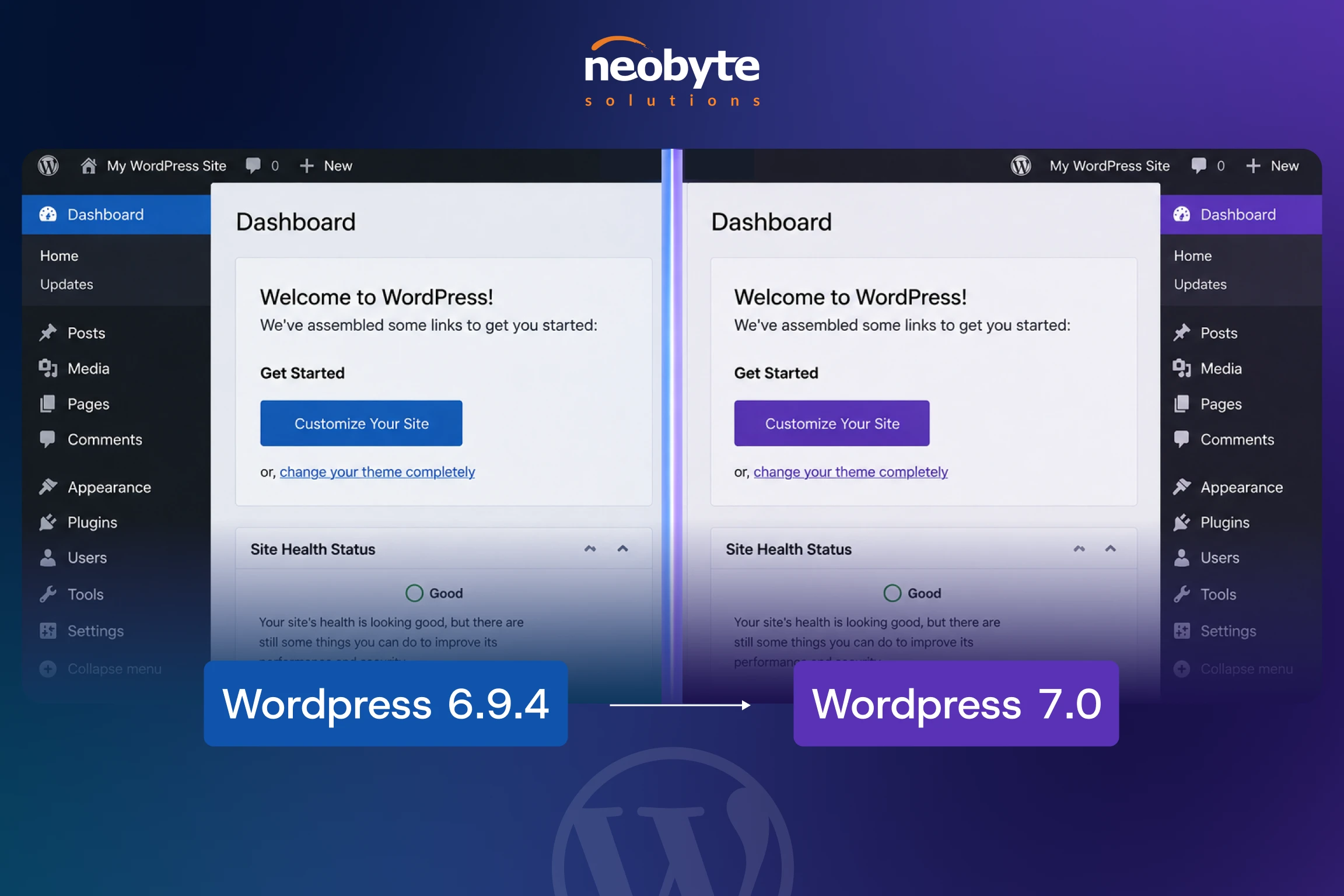
This change alone made me want to write about it. 🙂
Yes, I know this is a tiny UI change. Longtime developers will understand.
After all these years, we get to see a different identity color for the default color palette in WordPress admin.
WordPress did not completely remove its iconic blue identity.
Instead, WordPress 7.0 quietly shifted it from “Default” to “Fresh,” while promoting the previously optional “Modern” palette into the new default visual identity.
My settings were using the Default color scheme before I updated WordPress from 6.9.4 to 7.0. After the update finished and I got redirected to the success page, I was suddenly greeted by a purplish-blue interface replacing the iconic WordPress blue I had grown so used to seeing over the years.
It took my brain a few moments to understand what had actually happened:
WordPress 7.0 reassigned the default administration color scheme.
I honestly still do not know how to react, but at least the iconic blue survived under the identity of Fresh, waiting for longtime developers like me to switch back to it immediately.
The Investigation of a Certain... Color Scheme
Once my initial surprise about the disappearance of the iconic blue wore off, I decided to investigate what had actually changed between WordPress 6.9.4 and 7.0.
I reinstalled WordPress 6.9.4 and did a real comparison with WordPress 7.0.

The difference was obvious, which made me happy. It is something I can definitely live with.

Familiar Interfaces Become Part of Our Workflow Memory
Because I constantly work across multiple WordPress websites and almost always use the Default administration color scheme, the iconic blue gradually became part of my visual workflow expectations.
As developers, we often spend thousands of hours inside familiar interfaces. Over time, certain colors, layouts, and interaction patterns become deeply associated with workflows, debugging sessions, deployments, projects, and daily routines.
Maybe that is why such a small visual change can suddenly feel strangely emotional, even when the functionality itself remains almost identical.
Final Notes
WordPress did not suddenly become unrecognizable overnight. The familiar blue color scheme still exists under the identity of Fresh, and users can switch back to it at any time.
Still, this tiny visual transition quietly marks the evolution of the platform itself. After years of familiarity, even a small interface color change can unexpectedly remind longtime developers how much the web ecosystem continues changing around us.