AI and Machine Learning in Business Without the Hype:
Three Practical Use Cases
How business problems, data quality, and expected outcomes shape the practical use of AI.
Generative AI tools are now used in both personal and professional contexts. People use them to write or review code, summarize documents, analyze data, prepare draft content, answer support questions, and hold conversations.
This widespread use can create the impression that AI is suitable for every context and that introducing it will automatically transform a business. For SMEs, this creates an uncomfortable mix of curiosity and skepticism, particularly when the technology is presented without reference to the realities of their workflows, systems, or data.
In 2026, companies evaluating AI are examining cost, reliability, data quality, integration, human oversight, and what happens when usage limits are reached before work is completed. A company considering AI should identify the business problems that AI tools could address effectively.
The following three use cases show how businesses can use AI in practice and the conditions required.
1. Automating Repetitive Business Processes
AI can support processes that involve recurring tasks and recognizable patterns, such as:
* extracting information from invoices;
* categorizing incoming requests;
* identifying incomplete submissions;
* assigning support requests based on their subject or urgency;
* summarizing documents or conversations.
A company processing hundreds of supplier documents could use document-recognition technology to extract names, invoice numbers, dates, and totals. An employee could then verify the information before it enters the accounting system.
Suitable processes occur frequently, follow reasonably consistent patterns, and produce results that can be checked. AI can process large volumes efficiently, but it can also repeat the same error many times before anyone notices. Human review checkpoints, monitoring, and a way to pause the process are therefore necessary.
2. Using Predictive Analytics for Better Planning
Machine learning can produce estimates or probabilities based on patterns in historical data.
Practical applications for SMEs may include:
* forecasting sales or product demand;
* planning inventory;
* identifying customers at risk of leaving;
* predicting late payments;
* anticipating maintenance needs;
* detecting unusual transactions.
A distributor could use previous sales, seasonal changes, promotions, and delivery times to estimate future product demand. The estimate could support inventory decisions, although unexpected events may affect actual demand.
Historical data may reveal patterns across days, months, seasons, or years. Market changes, new competitors, pricing decisions, or supply disruptions may reduce their relevance. Forecasts must therefore be interpreted alongside their assumptions and uncertainty.
Reliable predictive models require enough representative data to include both typical and unusual outcomes. A small set of examples may support initial testing, but cannot establish performance in practice.
3. Improving Access to Business and Support Information
AI can make information easier to retrieve from dashboards, documents, reports, and approved support materials.
AI-assisted Business Intelligence
An authorized manager could ask:
Which invoices are overdue by more than 30 days?
Why did support requests increase this month?
Which product category had the largest decline in revenue this quarter?
The AI interprets the question, retrieves information from approved data sources, and presents the answer alongside the underlying figures. This can make existing Business Intelligence systems easier to use, but the results must remain traceable and subject to verification.
Customer-support assistant
A chatbot connected to an approved knowledge base may answer routine questions about orders, services, account access, or company policies. When a request is sensitive, ambiguous, or outside its scope, it can transfer the conversation to an employee together with a concise summary.
Its usefulness comes from retrieving approved information, operating within access permissions, and recognizing when human intervention is necessary.
These systems should not make unsupported promises, expose restricted information, or make sensitive decisions independently.
What AI Cannot Do
AI is a tool, not an entity capable of holding responsibility. The same applies to other software, including operating systems, accounting applications, code editors, and email services. AI remains a technological tool even when it communicates conversationally or completes work with limited intervention.
Just as a traditional spelling checker can flag a word without determining whether it is appropriate in context, AI can identify a pattern or inconsistency without determining the appropriate business response.
It cannot reliably:
* decide which business problem a company should address;
* correct inconsistent workflows without agreed rules;
* guarantee predictions or reliably infer context that is not represented in the available information;
* produce consistently reliable results when relevant data is incomplete or inaccurate.
A model may respond confidently even when its information is incomplete. Similarly, an automated workflow may repeat and accelerate mistakes when validation controls are missing.
Every business AI project therefore needs clear ownership, defined risks, points of human intervention, and continued review.
Data Readiness Comes First
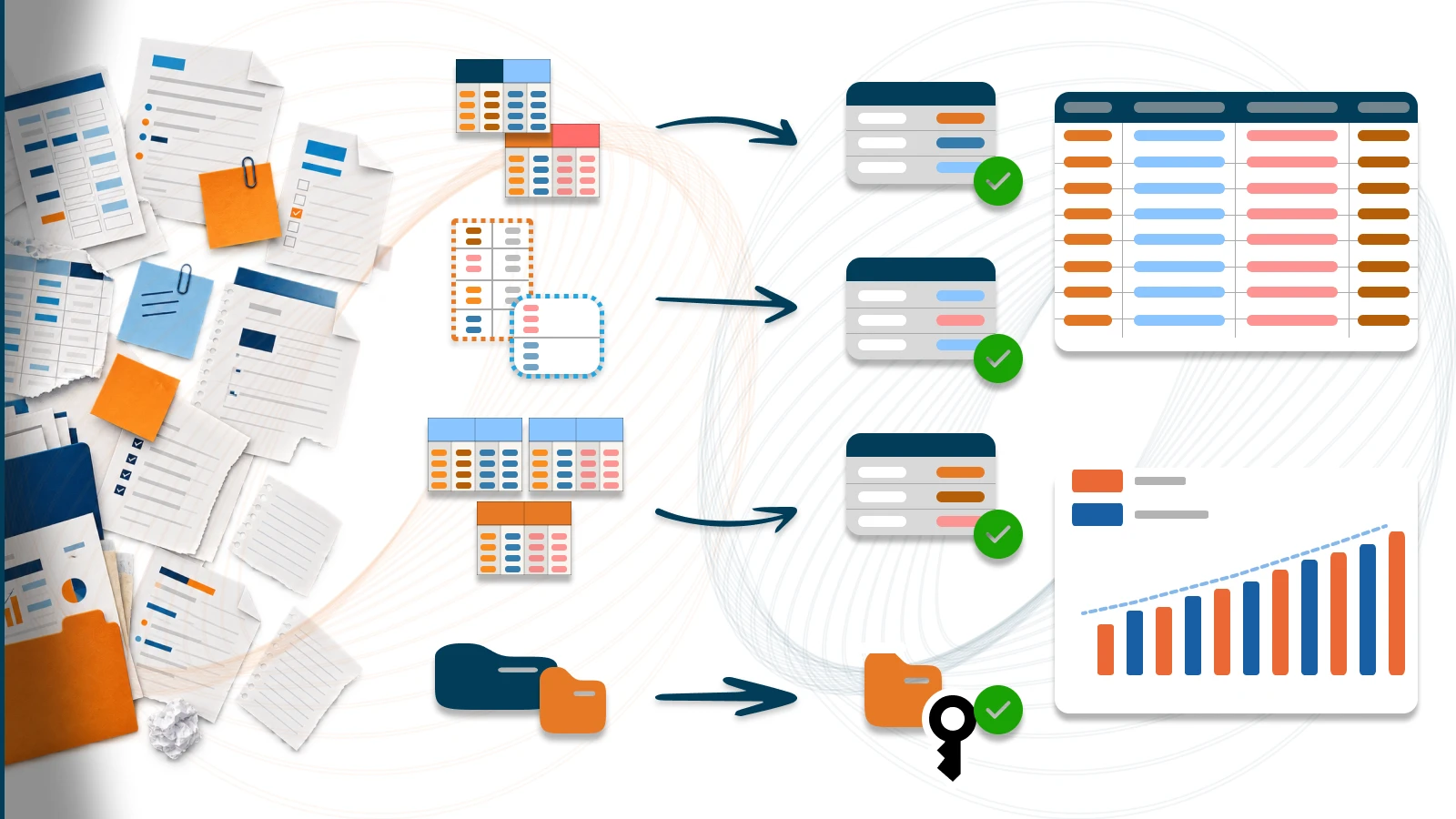
A company may collect large amounts of information without having data that is ready for an AI system.
Common problems include:
* duplicate or incomplete records;
* inconsistent naming;
* disconnected systems;
* conflicting definitions;
* outdated information;
* unclear ownership or access rights.
Before implementing a system, the team must understand where the data comes from, who maintains it, whether it can be lawfully used, and whether it accurately reflects the process the system will support.
In some cases, the most valuable first step is improving data collection, definitions, integrations, access controls, and governance. This preparation determines whether the eventual AI system can be trusted.
Start Small With a Focused Pilot
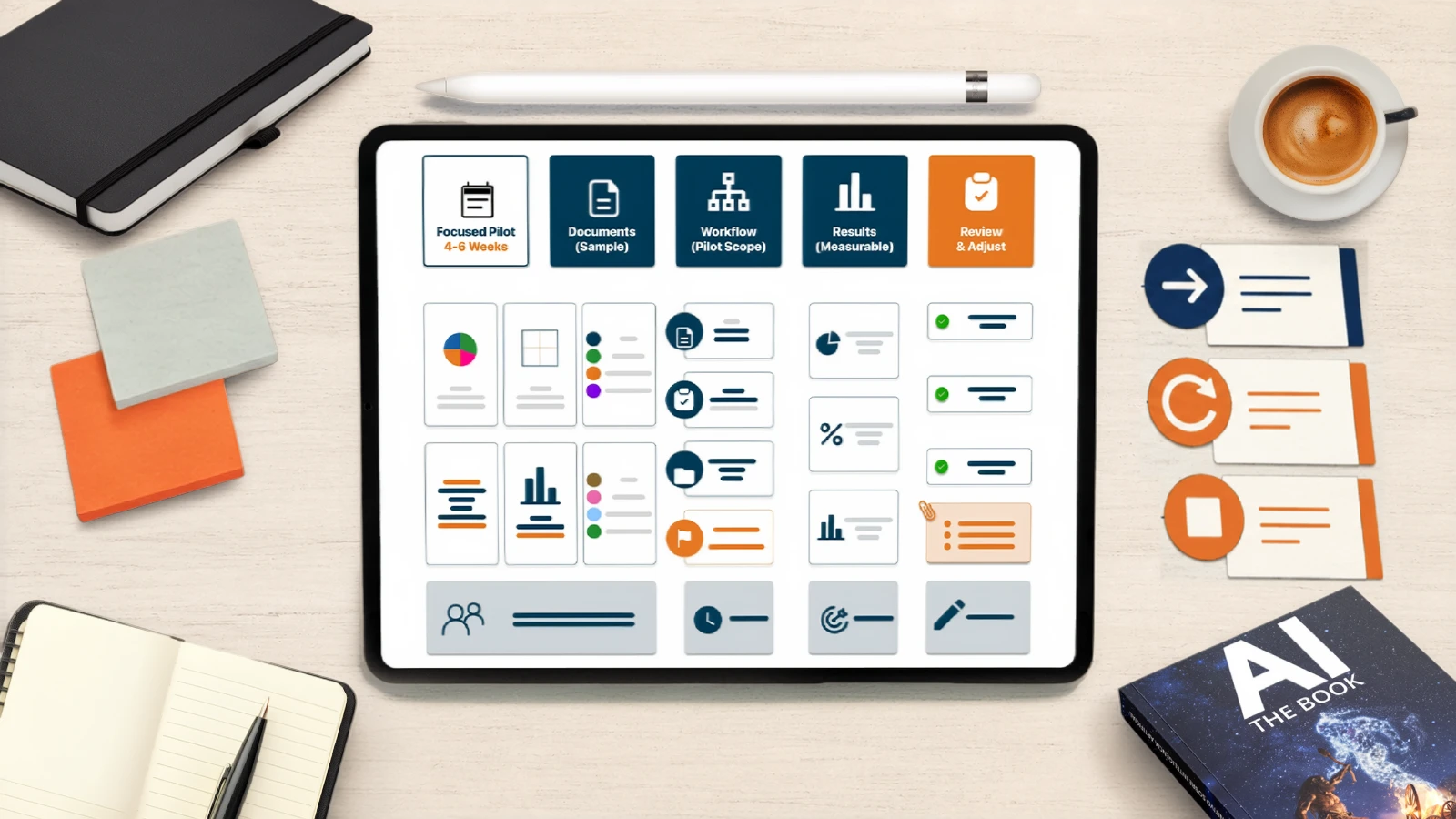
A focused four-to-six-week pilot can test whether a proposed use case is technically feasible and useful in practice.
The pilot may include:
1. defining one business problem;
2. reviewing the current workflow and available data;
3. setting a clear expected outcome;
4. building a limited prototype;
5. testing it with representative examples;
6. evaluating accuracy, risks, and user feedback.
The pilot should establish whether the system fits the workflow, produces sufficiently reliable results, and allows its output to be reviewed or corrected. It should end with a decision to continue, revise the approach, improve the underlying data or process, or stop.
Final Thoughts
Some business problems can be addressed effectively by improving an existing workflow or introducing simpler automation.
For SMEs, a clearly defined problem, suitable data, and a focused pilot provide a practical basis for deciding whether an AI solution should be developed further.
Is AI a Realistic Fit for Your Business?
Neobyte Solutions can help evaluate whether AI is suitable for a specific business need by reviewing the current workflow, available data, and technical environment.
An AI feasibility assessment can clarify:
- whether AI or machine learning is appropriate;
- whether a simpler solution may be more effective;
- what should be prepared before implementation;
- what a focused four-to-six-week pilot could include;
- which criteria should be used to review its results.